AB 460 California Bill Explained: What Does It Mean for the Future of Imaging?


Key Takeaways
- AB 460 redefines "direct supervision" in California's Radiologic Technology Act, allowing licensed physicians to supervise contrast media administration remotely via real-time audio-visual technology starting January 1, 2026.
- Physical physician presence is no longer required for contrast-enhanced CT and X-ray procedures in California, but strict onsite staffing and emergency protocol requirements still apply.
- Rural and underserved imaging centers stand to gain the most, as virtual supervision removes the geographic barriers that previously limited access to contrast-enhanced imaging.
- Compliance isn't automatic; as such, imaging centers must update policies, technology infrastructure, personnel credentials, and emergency protocols.
- At ContrastConnect, we deliver AB 460-compliant virtual contrast supervision through a network of qualified radiologists on a HIPAA-compliant platform.
What Does the AB 460 California Bill Mean?
Assembly Bill 460 has been in effect since January 1, 2026, officially modernizing how California defines direct physician supervision during contrast media administration.
For imaging centers that have struggled for years with the rigid requirement of having a physician physically present on-site during every contrast-enhanced scan, this legislation is a genuine turning point.
It signals the state's official acknowledgment that live audio-visual technology can meet the definition of direct physician supervision during contrast media administration. For imaging center operators, that shift changes both the economics and the geography of what their facilities can offer patients.
ContrastConnect: Virtual Contrast Supervision That Never Misses
Built by Radiologists | 75,000+ Hours Monthly Contrast Exams | Trusted Nationwide

Built for Imaging Centers:
- Virtual Contrast Supervision: Radiologists provide immediate CMS-compliant supervision through a secure, HIPAA-compliant platform for outpatient imaging facilities.
- Unmatched Experience: 130+ contrast reactions treated monthly with 3,900+ technologists certified.
The ContrastConnect Difference:
- ✓ Radiologist-owned with superior clinical expertise
- ✓ Always-on platform with guaranteed compliance
- ✓ Audit-ready documentation for CMS reviews
- ✓ Cost-efficient alternative to onsite staffing
Safety & Compliance You Trust:
Helping imaging centers reduce cancellations, extend hours, and scale operations without adding on-site radiologists. Response times measured in seconds.
What “Direct Supervision” Meant Before AB 460
Before AB 460, California's Radiologic Technology Act defined direct supervision as requiring a licensed physician to be physically present in the facility whenever a radiologic technologist administered contrast media to a patient.
That standard made sense in an earlier era, when real-time remote communication wasn't viable. But from 2020 onward, the gap between California state law and Centers for Medicare & Medicaid Services (CMS) federal supervision standards widened and became harder to justify. CMS had already recognized virtual supervision as compliant oversight for contrast procedures, while California remained locked in place.
The practical consequences were real and costly. Outpatient imaging centers were forced to either schedule a physician on-site for every contrast scan or turn patients away entirely. That created access bottlenecks, inflated staffing costs, and left radiologic technologists in a difficult position when physician availability was limited.
How AB 460 Redefines Direct Supervision
AB 460 amends California's Radiologic Technology Act to explicitly recognize real-time audio-visual technology as a legitimate and legally compliant means of providing direct supervision during contrast media administration.
A supervising physician no longer needs to be physically present in the building. They must be immediately available via a live, two-way audio-video connection, have access to the patient's medical imaging records, and be able to intervene by directing other onsite personnel.
This brings California into alignment with federal CMS standards, which is significant for regulatory consistency and for the operational and financial planning of imaging centers statewide.
The new definition took effect on January 1, 2026, and California imaging centers have been operating under it since. Facilities that have not yet updated their policies, technology, and protocols are already out of step with the current standard.
What Must Still Be in Place at the Imaging Site
Required Onsite Licensed Personnel

AB 460 requires that at least one qualified individual be physically present at the imaging facility during any contrast-enhanced procedure conducted under virtual supervision. That person must hold a license or credential that enables them to respond appropriately to adverse contrast reactions.
Any one of the following can fill that role, provided they are working within their scope of practice:
- A registered nurse (RN).
- A nurse practitioner (NP).
- A clinical nurse specialist (CNS).
- A physician assistant (PA).
- A physician and surgeon physically onsite, which also satisfies the traditional supervision pathway.
Emergency Protocol Requirements
Emergency response readiness is non-negotiable under AB 460. Facilities operating under virtual supervision must have documented safety protocols. AB 460 does not specify what those protocols must contain, so most facilities build them around ACR contrast reaction management guidance: clearly assigned roles for onsite personnel, access to emergency medications, and a defined escalation pathway that includes the remote supervising physician.
The remote physician must be reachable instantly throughout the entire contrast administration window.
The Real-World Impact on Imaging Centers
Rural & Community Imaging Centers Benefit Most
The facilities that stand to gain most from AB 460 are those in rural, frontier, and medically underserved areas of California. For these centers, the law fundamentally changes what services they can offer their communities.
A community imaging center in the Central Valley or the Inland Empire, for example, can now provide contrast-enhanced CT exams without requiring a radiologist to drive to the site for each procedure.
That translates directly into faster diagnosis timelines and improved access for patients who might otherwise need to travel long distances for a scan their local facility could perform.
How Virtual Supervision Eliminates Scheduling Bottlenecks
One of the most immediate operational benefits of AB 460 is eliminating the physician scheduling constraint that has throttled contrast imaging capacity at outpatient and community facilities across the state.
With virtual supervision, a single radiologist can cover contrast procedures at more than one facility without traveling between sites, so long as they remain immediately available to intervene at each site as the law requires.
Operational Workflow Changes to Expect
Imaging centers transitioning to virtual supervision under AB 460 will need to rethink several core workflow assumptions. The biggest change is introducing a real-time communication checkpoint at the start of every contrast procedure.
Front-end scheduling systems will also need to reflect the new model. Facilities should build virtual supervision session windows into their appointment-booking infrastructure, confirming physician availability through the remote platform before offering contrast scan slots to patients.
What This Means for Patient Access to Contrast-Enhanced Exams
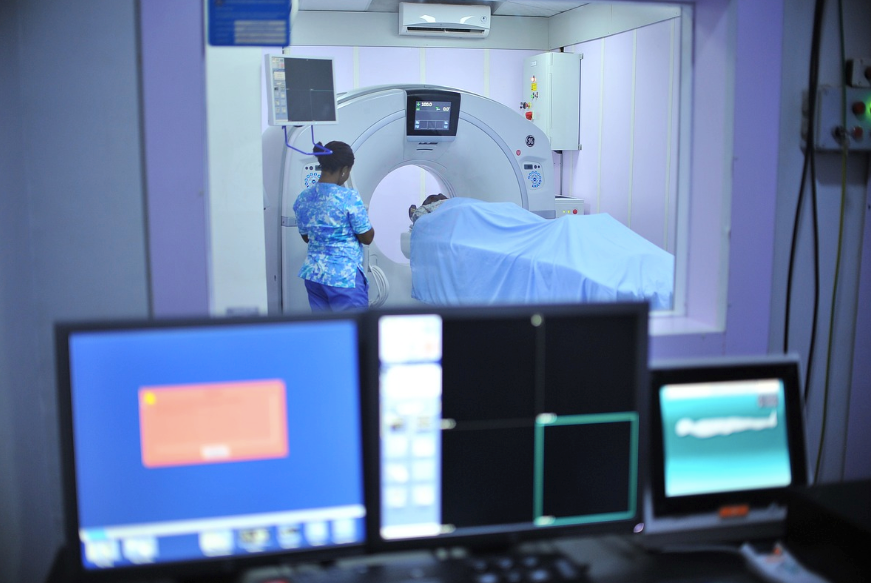
For patients, AB 460 means shorter wait times, fewer referral transfers to larger hospital systems, and a greater likelihood that their local imaging center can perform the contrast-enhanced study their physician ordered.
Faster access to contrast imaging supports faster diagnosis and earlier treatment initiation for time-sensitive conditions, such as cancer staging, pulmonary embolism evaluation, and vascular disease assessment.
Compliance Steps Imaging Centers Should Take Now
- Review Your Current Supervision Policies Against HSC §106985: Any policy language that specifies physician physical presence as the standard for direct supervision must be rewritten to reflect the new virtual supervision framework. Work with your legal or compliance team to ensure updated policy documents are formally adopted, version-controlled, and distributed to all relevant staff without further delay.
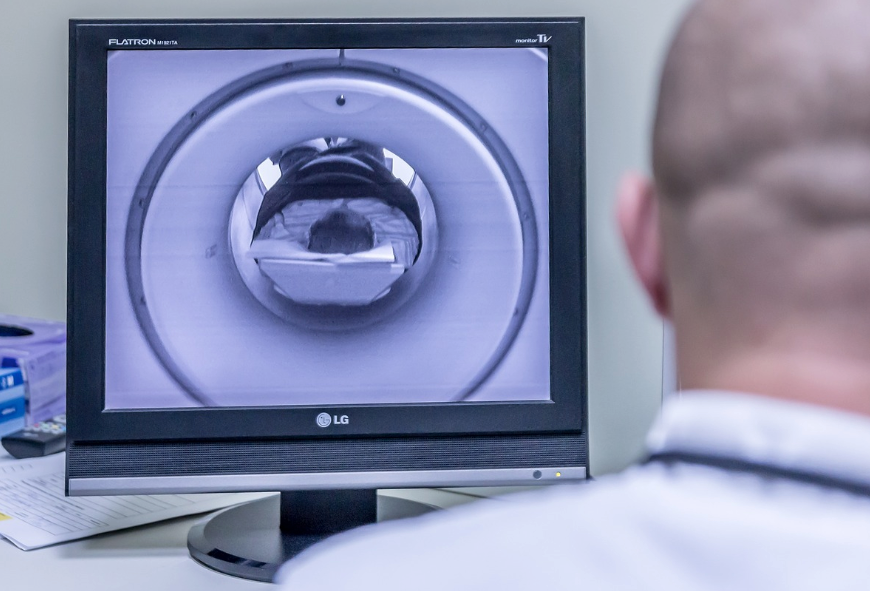
- Evaluate Your Audio-Visual Technology Infrastructure: The statute requires the supervising physician to be immediately available via two-way audio and video communication, with access to the patient's imaging records and the ability to direct onsite personnel, so facilities should select a platform that can establish that connection without delay at any point during contrast administration.
- Confirm Onsite Personnel Credentials Meet the New Requirements: Even with a compliant remote supervision arrangement in place, AB 460 requires that a qualified individual be physically present at the facility during contrast procedures. Now is the time to audit your current staffing roster and confirm that your onsite team's credentials meet this requirement during every shift that includes contrast imaging.
- Update Emergency Response Protocols: Rewrite your emergency response protocols to explicitly reflect the virtual supervision model. The updated protocols should define the precise escalation sequence when a contrast reaction occurs.
- Document Everything for Regulatory Audits: Documentation is where AB 460 compliance either holds together or falls apart under scrutiny. Capture every element of your virtual supervision program in a structured, retrievable format. Maintain a supervision session log for every contrast procedure, including date, time, supervising physician identity, onsite personnel identity, and platform used.
Prepare Your Imaging Center for AB 460 With ContrastConnect
AB 460 removed the barrier. It didn't supply the radiologist. Months into the new standard, the California centers that moved early are running contrast scans in hours they used to leave uncovered. The ones still waiting on a physician to be free are turning patients away for a reason the law no longer requires them to accept, and that is a revenue number, not a compliance footnote. Every contrast study you cancel, defer, or refer out to a larger system is billable volume you don't get back.
ContrastConnect supplies the supervision so your schedule stops being capped by physician availability. Facilities working with us see up to 25% more revenue and up to 75% lower costs than onsite staffing models, and California centers can go live under AB 460 without adding a single radiologist to payroll. Start your coverage assessment today.
Frequently Asked Questions (FAQs)
What is AB 470 in California?
AB 470 is a separate California Assembly Bill unrelated to radiology supervision. It should not be confused with AB 460, which specifically amends the Radiologic Technology Act to permit virtual direct supervision for contrast media administration. If you are researching imaging center compliance for 2026, AB 460 applies to your operations.
What is SB 10 California?
In the current 2025–2026 legislative session, SB 10 (Padilla) deals with climate change planning and gender impacts, nothing to do with healthcare, radiology, or imaging center operations. It is sometimes confused with a different SB 10 from 2018, a money bail reform measure that California voters rejected through Proposition 25 in November 2020 and which never took effect. Neither is connected to AB 460.
Does AB 460 apply to hospital-based imaging departments or only outpatient centers?
AB 460 amends California's Radiologic Technology Act, which applies broadly to facilities performing radiologic procedures under that statute, including both hospital-based and outpatient imaging settings. However, hospital-based imaging departments that operate under different licensure frameworks or are governed primarily by CMS Conditions of Participation may have additional or overlapping regulatory requirements that interact with AB 460's provisions.
Can any licensed physician provide virtual supervision, or must it be a radiologist?
AB 460 refers to a supervising physician but does not restrict that role exclusively to radiologists. The supervising physician must hold a valid California medical license and act within their scope of practice and competency when overseeing contrast media administration.
How can ContrastConnect help my imaging center meet AB 460 requirements?
At ContrastConnect, we provide virtual contrast supervision built to meet CMS and California state requirements, which AB 460 formalizes. Qualified radiologists deliver real-time oversight of your contrast-enhanced exams through a HIPAA-compliant, always-on platform, with response times measured in seconds and audit-ready documentation captured for every session. This gives California outpatient imaging centers a way to keep contrast scans running, meet AB 460 without adding on-site staffing costs, and scale capacity as demand grows.
*Note: Information provided is for general guidance only and does not constitute medical, legal, or financial advice. Pricing estimates and regulatory requirements are current at the time of writing and subject to change. For personalized consultation on imaging center operations and virtual contrast supervision, contact ContrastConnect.
Trusted Nationwide































.avif)




1,000,000
Contrast exams supervised annually
75,000+
Hours of supervision monthly
4,100+
Technologists certified
500+
Imaging partners nationwide
130+
Contrast reactions treated monthly
100%
Requested hours covered
Connect with us.

